

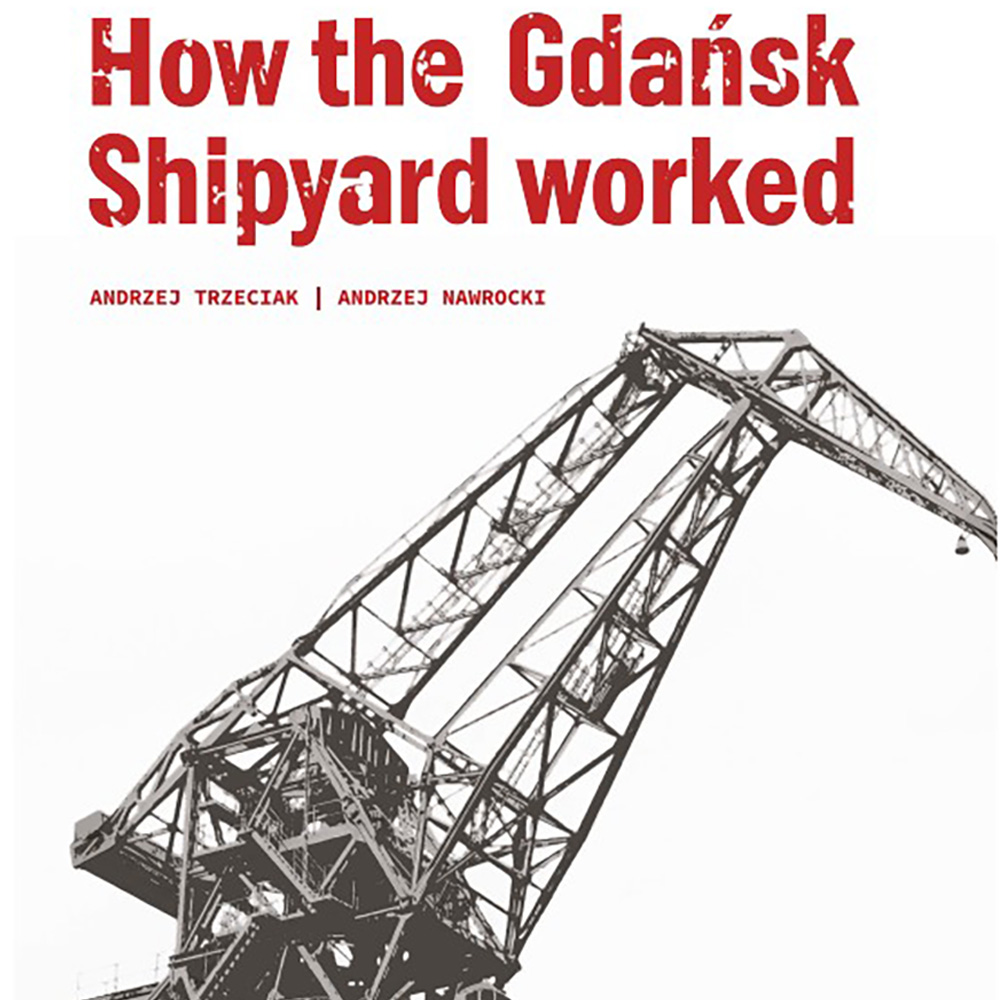
 Instytut Dziedzictwa Solidarności przygotował przekład książki „Jak działała Stocznia Gdańska” na język angielski („How the Gdańsk Shipyard worked”).
W ten sposób Instytut pragnie ułatwić licznym gościom zagranicznym odwiedzającym Gdańsk i Stocznię Gdańską poznanie bogatej industrialnej spuścizny historycznego zakładu, jak również umożliwić gronu specjalistów spoza Polski, w tym także ekspertom UNESCO, rzetelną ocenę roli i znaczenia przemysłowej spuścizny Stoczni Gdańskiej.
Autorzy podjęli próbę zdefiniowania zachowanego industrialnego dziedzictwa Stoczni Gdańskiej, obecnie niemal całkowicie zapomnianego. W celu ukazania rangi stoczni i jej różnorodnej produkcji starali się wpisać historię i bogaty przemysłowy dorobek zakładu w całokształt lokalnej i ponadlokalnej wytwórczości okrętowej oraz rozwoju okrętownictwa. Omawiana publikacja jest pierwszą, w której starano się uchwycić i opisać w możliwie pełnym zakresie zasady funkcjonowania największej polskiej stoczni, dając szeroką podstawę do interpretacji jej zachowanego industrialnego dziedzictwa.
W książce znajdują się dokładne opisy wszystkich istniejących zabytków przemysłowych stoczni wraz z charakterystyką ich funkcji produkcyjnych. Autorzy podjęli także trud uchwycenia i wpisania tego, co definiowało stocznię – realizowanych w niej procesów technologicznych, w zmieniającą się przestrzeń, która na naszych oczach staje się żywą częścią miasta. Książka „Jak działała Stocznia Gdańska” to narzędzie niezwykle pomocne w procesie ochrony i ekspozycji walorów kulturowych dawnej Stoczni Gdańskiej, będących ważnym składnikiem gdańskiego i polskiego dziedzictwa kulturowego.
Omawiana publikacja może być także przydatna zarówno dla miłośników dziedzictwa przemysłowego, osób i instytucji zajmujących się jego ochroną i popularyzacją, użytkowników obszarów historycznego zakładu, jak również architektów czy urbanistów, a także osób i instytucji zajmujących się planowaniem przestrzeni z uwzględnieniem walorów kulturowych. Treść książki została uzupełniona bogatym materiałem ikonograficznym oraz licznymi mapami ułatwiającymi zrozumienie złożonych procesów technologicznych, realizowanych w przestrzeni stoczni.
Z recenzji książki „Jak działała Stocznia Gdańska”
Publikacja jest modelowym opracowaniem przydatnym dla innych obejmowanych ochroną obiektów przemysłowych. Analiza zabytku techniki poprzez rozpoznanie realizowanych w nim funkcji daje możliwość prowadzenia odpowiedzialnej polityki ochrony. Takie podejście do zabytku techniki umożliwi jego zachowanie w sposób wyjaśniający pierwotną funkcję, a także rodzaj zastosowanych rozwiązań organizacyjnych, technologicznych, materiałowych, konstrukcyjnych i architektonicznych.
dr hab. inż. arch. Piotr Gerber, prof. Politechniki Wrocławskiej, specjalista w zakresie ochrony dziedzictwa przemysłowego, członek krajowych i międzynarodowych organizacji, m.in. Komitetu Ochrony Dziedzictwa Przemysłowego (TICCIH), Komitetu Dziedzictwa Przemysłowego i Inżynieryjnego Europa Nostra, Rady Ochrony Zabytków przy Ministrze Kultury, założyciel Fundacji Ochrony Dziedzictwa Przemysłowego Śląska
Jednakowoż wiarygodność i kompetencje autorów oraz zastosowana obiektywna narracja czyni z niej dzieło potrzebne, pożyteczne, interesujące i warte posiadania jako dotąd jedyne w swoim rodzaju.
dr inż. Waldemar Affelt, Uniwersytet Mikołajka Kopernika w Toruniu, specjalista w zakresie budownictwa zabytkowego i dziedzictwa technicznego, członek m.in. Głównej Komisji Konserwatorskiej przy Generalnym Konserwatorze Zabytków (2012–2016), Międzynarodowej Rady Ochrony Zabytków i Miejsc Historycznych (ICOMOS), Komitetu Ochrony Dziedzictwa Przemysłowego (TICCIH), członek prezydium Polskiego Komitetu Narodowego TICCIH, laureat Nagrody im. Jana Zachwatowicza (2023)


